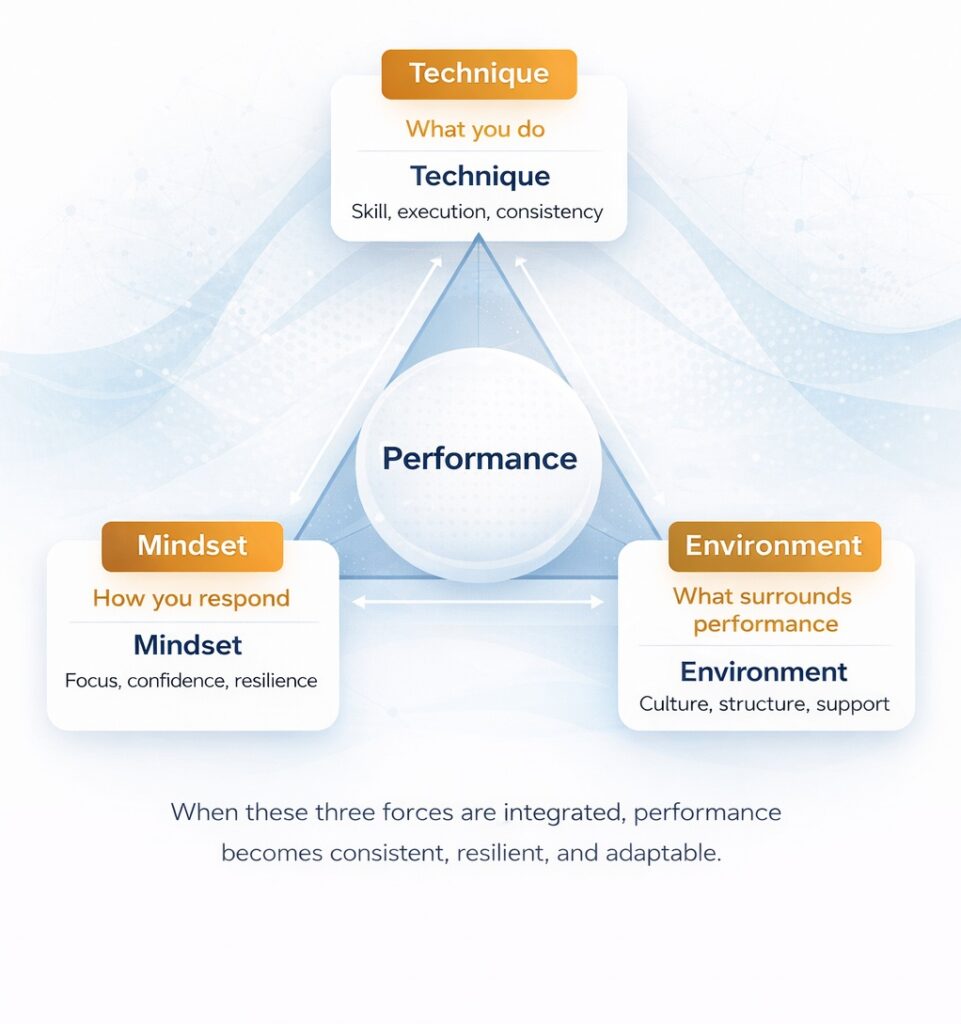
Most performance systems focus on effort or repetition alone. This approach integrates technique, mindset, and environment into one intentional performance design.
Too many approaches improve isolated elements. Performance breaks down because the system around it is never designed.
Technique without transfer
Technical improvement often stays trapped in drills and controlled settings. It looks good in training, but does not consistently show up under pressure, in competition, or in real performance moments.
Mindset without structure
Focus, confidence, and resilience are treated as separate topics instead of being built into daily practice. Without structure, mindset becomes something people talk about, not something that consistently influences performance.
Environment without intention
Culture, coaching, leadership, and feedback shape performance every day. When the environment is not intentionally designed, progress becomes inconsistent and dependent on individuals instead of the system around them.
The System
Performance Architecture
This system was developed in environments where performance is visible, measurable, and unforgiving. In elite sport, it became known as the Athlete Experience System. But the underlying structure goes beyond sport. It applies wherever people are expected to perform, improve, and deliver under pressure.
How it Works
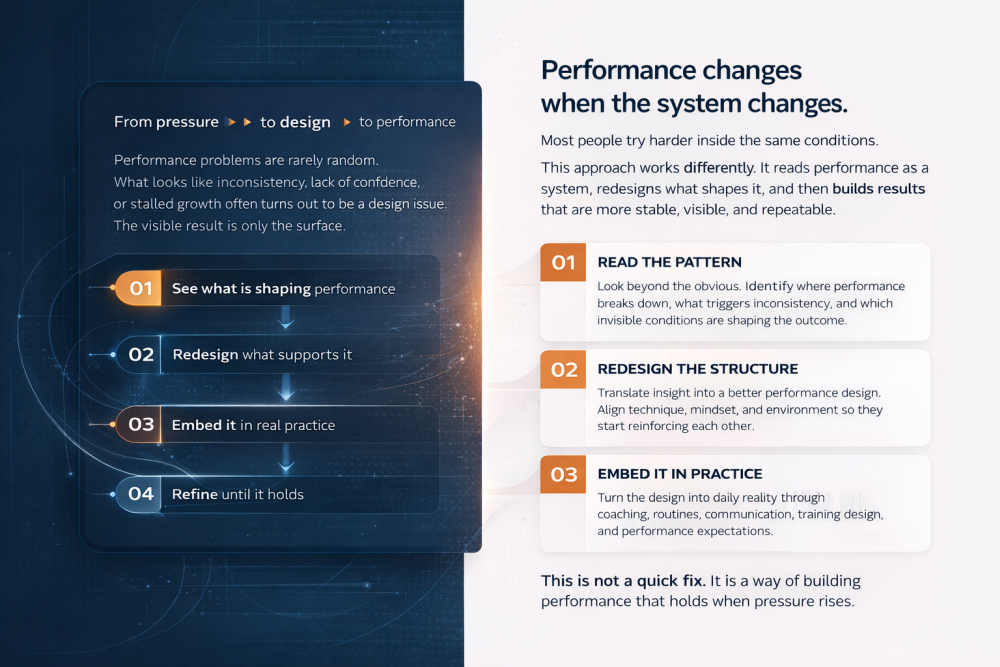
Performance is not trained. It is designed
Most people try harder inside the same conditions.
This approach works differently. It reads performance as a system, redesigns what shapes it, and then builds results that are more stable, visible, and repeatable.
Not a quick fix. A system shift. Most performance problems are treated at the surface. We redesign what creates them.
where it applies
Where this system becomes real
The same system applies wherever performance matters — but the context changes how it shows up.
Individual Performance
Where performance is personal
Skill execution
Confidence
Development
Performance Under Pressure
Where performance becomes decision-making
Leadership
Focus
Resilience
Structured Performance
Where performance becomes systemic
Teams
Organizations
Strategy
In practice, this system shows up in three ways.
Athlete Development
PhenoManon
Developing athletes and teams through structured training, technical precision, and performance awareness.
Leadership & Performance Mindset
The Unexpected Olympian
Applying performance principles to pressure, focus, and decision-making in competitive and professional environments.
Strategic & Organizational Design
Olympic Architecture
Designing systems, structures, and environments that enable consistent performance across teams and organizations.
Work with the System
Apply the system to your context
Whether you develop athletes, lead teams, or design organizations, the system adapts. The structure stays the same. The results compound.